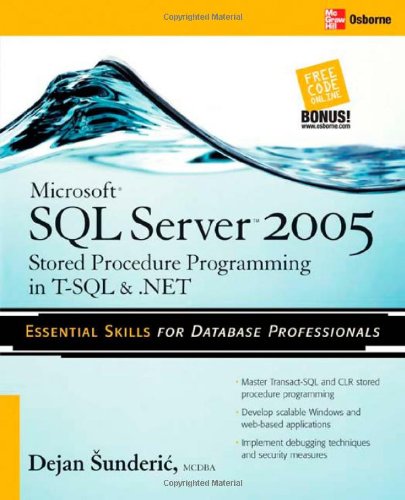
Microsoft SQL Server 2005 Stored Procedure Programming in T-SQL & .NET

CHEAP,Discount,Buy,Sale,Bestsellers,Good,For,REVIEW, Microsoft SQL Server 2005 Stored Procedure Programming in T-SQL & .NET,Wholesale,Promotions,Shopping,Shipping,Microsoft SQL Server 2005 Stored Procedure Programming in T-SQL & .NET,BestSelling,Off,Savings,Gifts,Cool,Hot,Top,Sellers,Overview,Specifications,Feature,on sale,Microsoft SQL Server 2005 Stored Procedure Programming in T-SQL & .NET Microsoft SQL Server 2005 Stored Procedure Programming in T-SQL & .NET

Microsoft SQL Server 2005 Stored Procedure Programming in T-SQL & .NET Overview
Create and Use Stored Procedures for Optimal Database Performance
Develop complex stored procedures to retrieve, manipulate, update, and delete data. Microsoft SQL Server 2005 Stored Procedure Programming in T-SQL & .NET identifies and describes the key concepts, techniques, and best practices you need to master in order to take full advantage of stored procedures using SQL Server's native Transact-SQL and .NET CLR languages. You'll learn to incorporate effective Transact-SQL stored procedures into client or middleware code, and produce CLR methods that will be compiled into CLR stored procedures. This is a must-have resource for all SQL Server 2005 developers.
Essential Skills for Database Professionals
- Group and execute T-SQL statements using batches, scripts, and transactions
- Create user-defined, system, extended, temporary, global temporary, and remote stored procedures
- Develop and manage stored procedures using C# and Visual Basic .NET
- Implement database access using ADO.NET
- Create CLR user-defined functions and triggers
- Implement reliable debugging and error handling techniques and security measures
- Manage source code in a repository such as Visual SourceSafe
- Create stored procedures for web search engines
- Use system and extended stored procedures to interact with the SQL Server environment
